Festivals

pongal

Pongal 

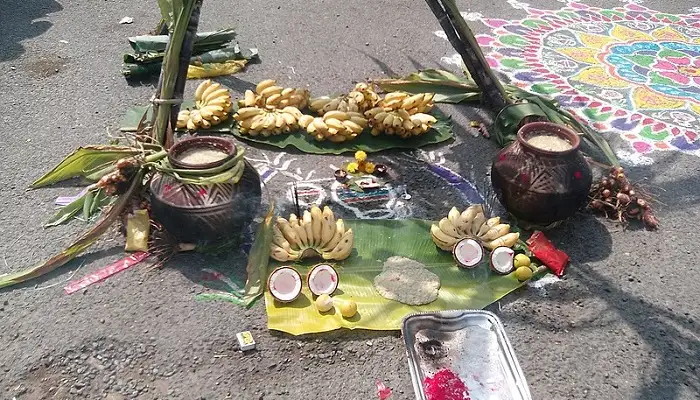
The four‑day‑long harvest festival of South India is one of the most famous festivals in India, celebrated with immense joy and devotion. People prepare traditional Pongal dishes and wear their cultural attire, making it one of the major festivals of India that beautifully reflects gratitude to nature. During this festival, celebrations include bonfires, dancing, cattle races, sweets, and savouries, creating a vibrant atmosphere across villages and towns. The houses look resplendent with Kolam designs (traditional floral patterns made with rice, colored powders, and flower petals), adding charm and colour to the festivities.

Pongal  Read More »

dussehra

 Dussehra 

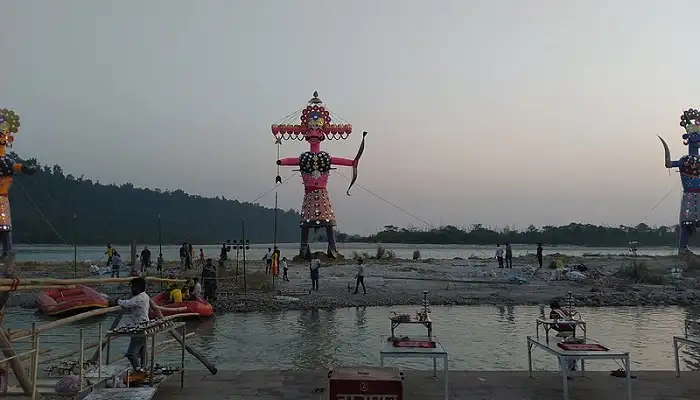
Dussehra, also referred to as Vijayadashami, is also among the most popular festivals in India in the Hindu religion. It is celebrated in different forms throughout the country. Ramlila (enactment of scenes from Ramayana) is held everywhere for 10 days. It culminates with “Ravan Dahan” – the burning of huge effigies of Ravana, Meghnath, and Kumbhkaran, which is a real spectacle to see.  While in Mysore, a colourful procession is taken out, in Kullu, it is celebrated for 10 days, welcoming their mountain deities into the valley. The Mysore Palace is lit like a bride, and the atmosphere is filled with the music of drums.

 Dussehra  Read More »

holi (1)

Holi

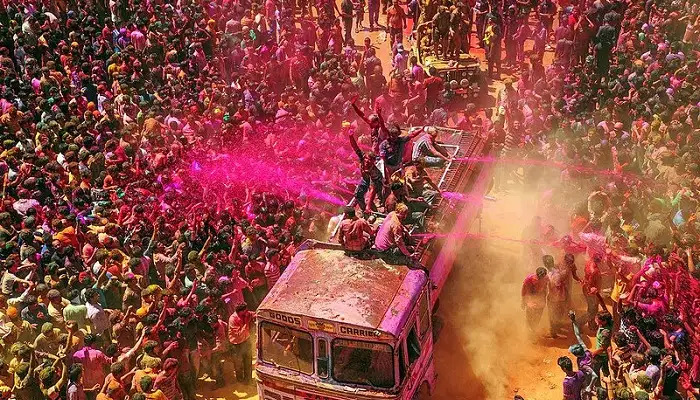
Also known as the festival of colours, Holi is among the most popular festivals in India, celebrated with a lot of fervour across the country. On the eve of Holi, people make huge Holika bonfires and sing and dance around them. On the day of Holi, the famous festival of Indian states, people gather in open areas and apply dry and wet colours of multiple hues to each other, with some carrying water guns and colored water-filled balloons. It tops the charts of 10 famous festivals in India, as it is celebrated all across the world with happiness.

Holi Read More »

diwali (1)

 Diwali

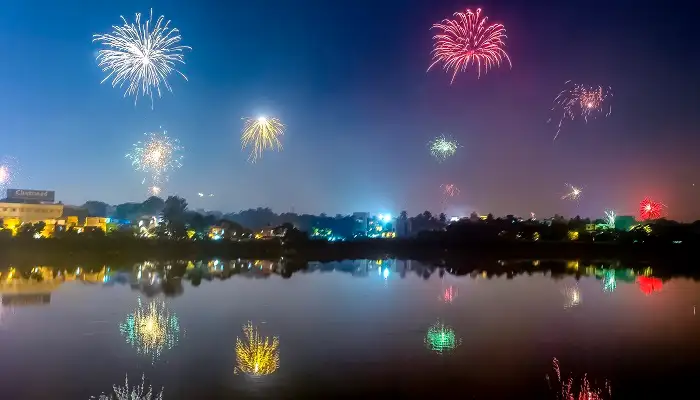
Diwali, one of the most prominent Hindu festivals in India, is celebrated with a lot of pomp and show. During this festival of lights, houses are decorated with clay lamps, candles, and Ashok leaves. People wear new clothes, participate in family puja, burst crackers, and share sweets with friends, families, and neighbours. It is the most popular festival in India.

 Diwali Read More »

siddhivinayak temple new11 2025 12 6e497787dd0bdf305b5ffe757a7f9e79

Ganesha Chaturthi 

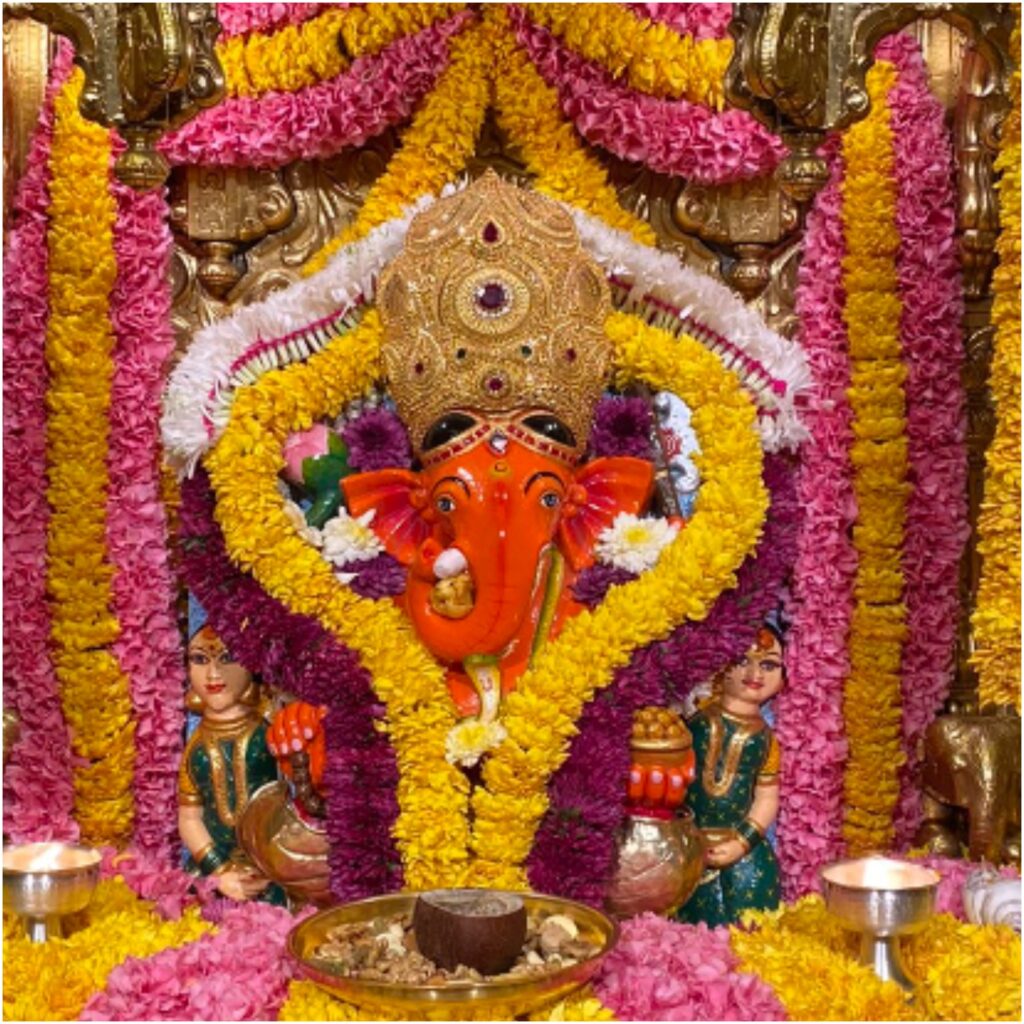
In 2026, Ganesh Chaturthi will be observed on Monday, September 14. The festival falls on the Chaturthi tithi of Shukla Paksha in the Hindu month of Bhadrapada, which traditionally marks the birth of Lord Ganesha. The duration of celebrations varies by household and region. Some devotees observe the festival for one and a half days, while others continue for five, seven or ten days, concluding with Ganesh Visarjan.According to Hindu timekeeping, the day is divided into five parts between sunrise and sunset: Pratahkala, Sangava, Madhyahna, Aparahna and Sayankal. Ganapati Sthapana and Shodashopachara Ganapati Puja are ideally performed during Madhyahna, making it the most preferred window for worship. Ganesh Chaturthi 2026: Moon Sighting Restriction And Mithya Dosha A significant belief associated with Ganesh Chaturthi is the prohibition against moon sighting on this day. It is said that seeing the moon during Chaturthi leads to Mithya Dosha or Mithya Kalank, meaning false accusation or undeserved blame. Ganesh Chaturthi Vrat Katha and the Syamantaka Mani story The origin of this belief is explained through the Ganesh Chaturthi Vrat Katha, narrated by Lord Shiva and later elaborated by Sage Narada. The story centres on Lord Krishna and the Syamantaka Mani, a divine jewel bestowed by Surya, the Sun god, upon Satrajit. The jewel produced gold daily but carried strict conditions of purity for its wearer.When Satrajit’s brother Prasenajit wore the jewel in an impure state, he was killed by a lion during a hunt. Krishna returned to Dwaraka without Prasenajit, leading to suspicion and false accusations against Him. Though Krishna later recovered the jewel from Jambavant and returned it, the allegations continued, even causing discord with His brother Balarama. Distressed by repeated slander, Krishna sought guidance from Sage Narada, who explained that the cause lay in Krishna having seen the moon on Bhadrapada Shukla Chaturthi. Narada revealed that Lord Ganesha had once cursed Chandra, the Moon god, for mocking His appearance. Ganesha declared that anyone who looked at the moon on this day would suffer false accusations. Narada advised Krishna to observe the Ganesh Chaturthi fast and worship Lord Ganesha with devotion. Krishna followed the prescribed vrat and rituals, after which the false accusations against Him were resolved. The story is cited as the reason devotees observe the vrat, avoid moon sighting, and recite the Vrat Katha on Ganesh Chaturthi.

Ganesha Chaturthi  Read More »

Listings
News
Home
Jobs
Contact