
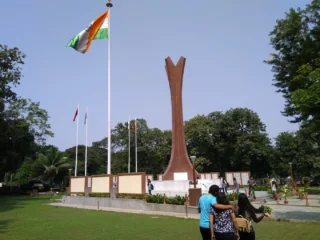
National War Memorial Southern Command
The National War Memorial Southern Command is a war memorial in the city of Pune, India, dedicated to post-Independence war martyrs. This is the only war memorial in South Asia which has been erected by citizens’ contributions. The memorial was unveiled and dedicated to the nation on 15 August 1998. A MiG-23BN, used in the Kargil War, is on display at the memorial. A replica of the now decommissioned frigate INS Trishul, which served in the Liberation of Goa and the Indo-Pakistani War of 1971, is also on display. There is a museum which showcases equipment used by the Southern Command over the years like their uniforms, ammunition, vehicles, tanks, and guns. The museum also gives the history of the Southern Command, the battles fought by them, the accolades won and other information. There is also a sound and light show held every Friday, Saturday and Sunday. In 2008, the Pune Cantonment Board sanctioned a sum of ₹32,00,000 ($47,550) for renovation of the memorial.The work included laying a new lawn,landscaping and laying pathways for visitors.
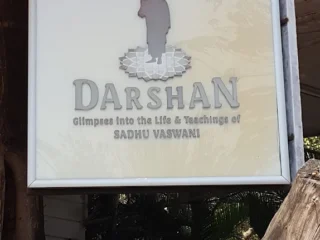
Darshan Museum
Darshan Museum is a unique and inspirational tourist attraction located in the heart of Pune, near the Pune Railway Station. Unlike traditional museums, Darshan Museum offers an immersive multimedia experience dedicated to the life and teachings of the renowned spiritual leader Sadhu T. L. Vaswani, founder of the Sadhu Vaswani Mission. About the Museum The museum beautifully presents the philosophy of love, compassion, peace, and service through modern audio-visual technology, 3D holography, interactive exhibits, and life-like installations. It takes visitors on a meaningful journey through the life story of Sadhu Vaswani, highlighting his humanitarian work and spiritual message. A Unique Experience Guided multimedia show available in multiple languages Stunning sound and light effects Interactive displays and storytelling Emotional and inspiring presentations Suitable for all age groups Unlike regular sightseeing spots, Darshan Museum provides a calm and thoughtful environment that touches the heart and mind of every visitor. Timings & Visitor Information Shows are conducted at regular intervals throughout the day Nominal entry fee Located at Sadhu Vaswani Mission, Camp Area, Pune Easily accessible by road and public transport Who Should Visit? Families and students Spiritual seekers Tourists interested in culture and values Anyone looking for a peaceful and uplifting experience Why Visit Darshan Museum? One of Pune’s most innovative and meaningful museums Combines spirituality with modern technology Educational, emotional, and inspirational Perfect break from routine sightseeing In Short:Darshan Museum is not just a museum—it is a transformative journey of values, compassion, and inner peace. It is a must-visit destination in Pune for those seeking a different and soulful tourism experience.

Phoenix Marketcity Pune
People say this shopping center offers a wide variety of stores, including many popular brands, and a diverse selection of dining options. They highlight the spacious layout, clean and well-maintained environment, and the vibrant, lively atmosphere. They also like the entertainment options, such as a movie theater and gaming zones, and the frequent events and festivals. Phoenix Marketcity Pune is one of Pune’s largest and most popular shopping and entertainment complexes, located in Viman Nagar near the Pune Airport. It’s a favourite destination for shoppers, food lovers, families, and tourists looking for a complete lifestyle experience under one roof. Shopping & Brands Phoenix Marketcity houses a vast range of national and international brands, covering fashion, accessories, footwear, cosmetics, electronics, and more. You’ll find everything from premium luxury labels to high-street brands, making it a go-to mall for fashion and lifestyle needs. Dining & Food Experiences The mall offers a diverse dining scene, with options ranging from casual cafés and fast-food outlets to fine-dining restaurants and speciality eateries. Whether you’re craving Indian flavours, global cuisine, desserts, or a relaxing coffee break, there’s something for every palate. Entertainment Zone Phoenix Marketcity features an advanced multiplex cinema, showcasing the latest Bollywood and international movies. It’s a great place to catch a film with friends or family. Leisure & Fun Games and activity zones for kids and adults Seasonal events and promotions Live music, fashion shows, cultural programs and themed festivals during holidays Ample parking and comfortable seating areas make it convenient for long visits Family & Social Hub The mall is designed to be family-friendly, drawing crowds of all ages for: Weekend family outings Shopping sprees Date nights Friends’ meetups Festival celebrations and seasonal markets Visitor Info 📍 Located in Viman Nagar, Pune 🛒 Open daily with extended hours on weekends and holidays 🎯 Easy access by cab, auto, or own vehicle — parking available Why Visit Phoenix Marketcity Pune One of the largest lifestyle malls in Pune Wide retail choice from fashion brands to gadgets Food & entertainment all in one place Event calendar with seasonal attractions and shows Comfortable, modern ambience ideal for city tourism In short: Phoenix Marketcity Pune is a major urban lifestyle destination offering world-class shopping, varied dining, entertainment, and leisure experiences — perfect for tourists, families, and anyone exploring Pune’s modern side.
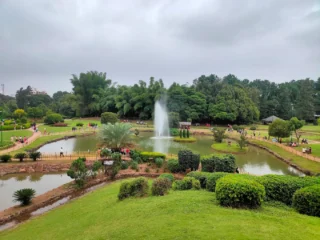
P L Deshpande Garden
P. L. Deshpande Garden, also known as Pu La Deshpande Udyan or the Japanese Garden of Pune, is one of the most beautiful and peaceful tourist attractions in the city. Located near Sinhagad Road, this garden is inspired by the famous Okayama Korakuen Garden of Japan, making it a unique blend of Indian and Japanese landscaping. Spread over a large area, the garden is named after the legendary Marathi writer and humorist Purushottam Laxman Deshpande (Pu La Deshpande). It is maintained by the Pune Municipal Corporation and has become a favorite destination for nature lovers, families, and tourists. Key Attractions Beautiful Japanese-style landscaping Artistic bridges, pathways, and water streams Colorful flower beds and lush greenery Well-maintained lawns and fountains Calm lake with scenic surroundings Quiet and relaxing atmosphere Perfect Spot for Relaxation The garden is designed to create a sense of peace and harmony. With its neatly planned layout, bamboo groves, stone lanterns, and small waterfalls, visitors feel transported to a different world. It is an ideal place for: Morning and evening walks Family picnics Photography Meditation and relaxation Spending quality time with loved ones Best Time to Visit Early morning or evening for pleasant weather Monsoon and winter seasons when the garden looks most vibrant Visitor Information Easily accessible from major parts of Pune Nominal entry fee Clean and well-maintained public facilities Why Visit P. L. Deshpande Garden? One of Pune’s most scenic gardens Unique Japanese architectural theme Peaceful escape from city life Great for nature lovers and photographers In Short:P. L. Deshpande Garden is a serene and beautifully designed urban park that offers a refreshing break from the busy city. Its calm environment, artistic design, and lush greenery make it a must-visit tourist destination in Pune.
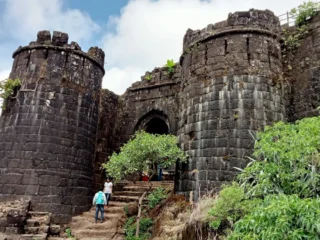
Sinhagad Fort
Sinhagad Fort, formerly known as Kondhana Fort, is one of the most famous historical and tourist destinations near Pune, Maharashtra. Situated about 30 km from Pune city, this hill fort stands at an altitude of around 1,312 meters above sea level, offering breathtaking views of the Sahyadri mountain ranges. The fort holds great importance in Maratha history, especially due to the heroic battle fought by Tanaji Malusare, a brave warrior of Chhatrapati Shivaji Maharaj. In his honor, the fort was renamed “Sinhagad,” meaning “Lion’s Fort.” Today, it is a symbol of valor, pride, and heritage. Major Attractions at Sinhagad Fort Tanaji Malusare Memorial – Dedicated to the legendary Maratha warrior Kalyan Darwaza and Pune Darwaza – Historic entrance gates Ancient temples like Kaundinyeshwar Temple Old military stables and ruins Scenic viewpoints offering stunning sunrise and sunset views Lush green surroundings during the monsoon season Popular for Trekking & Adventure Sinhagad Fort is one of Pune’s most loved trekking destinations. The trek route is suitable for beginners as well as experienced trekkers. Many visitors also reach the top by road, making it accessible for families and tourists of all age groups. Local Food Experience A visit to Sinhagad is incomplete without tasting the famous local delicacies available at the fort: Pithla Bhakri Kanda Bhaji (Onion Pakoras) Curd and ButtermilkThese simple Maharashtrian foods add a unique flavor to the trip. Best Time to Visit Monsoon and winter seasons are the best times to visit (June to February) Early morning or late evening visits are ideal to enjoy pleasant weather and clear views How to Reach By road from Pune (about 1–1.5 hours) Private vehicles, buses, and taxis are easily available Why Visit Sinhagad Fort? Rich historical significance Spectacular panoramic views Perfect picnic and trekking spot Great weekend getaway from Pune In Short:Sinhagad Fort is a perfect blend of history, nature, adventure, and scenic beauty. Whether you are a history lover, trekker, or casual traveler, it is one of the most memorable tourist spots around Pune.
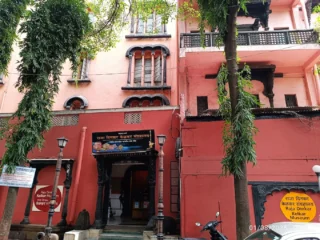
Raja Dinkar Kelkar Museum
Raja Dinkar Kelkar Museum is one of Pune’s most distinctive cultural and heritage museums, beloved by locals and tourists alike for its rare and fascinating collection of Indian art, culture, and everyday objects. The museum is located in the historic Shukrawar Peth area of Pune on Bajirao Road and is a must-visit for anyone interested in traditional Indian craftsmanship and history. History & Background Raja Dinkar Kelkar Museum was founded by Dr. Dinkar Gangadhar Kelkar, a passionate collector, historian, writer, and art enthusiast. His lifelong mission was to preserve exceptional artefacts from across India. He named the museum in memory of his beloved son, Raja, and the collection now comprises over 20,000 objects, with approximately 2,500 on display spanning many centuries of Indian history and culture. What You’ll See The museum is housed in a three-storey heritage building and showcases an extraordinary variety of artefacts that reflect the art, craft, and daily life of different regions of India. Highlights include: Traditional art and sculptures from past centuries. Carved wooden doors and intricate windows representing regional styles. Decorative lamps, vessels, brassware, and pottery. Musical instruments showing the evolution of Indian music. Textiles, ornaments, paintings, puppets, and more. Special sections such as the famous Mastani Mahal exhibit, noted for its historical significance and intricate design. Visitor Info 🕰️ Opening Hours: Generally 10:00 AM to 5:30 PM every day. 🎟️ Entry Fee: Modest charges apply — typically around ₹100 for Indian adults and ₹50 for children, with higher fees for some foreign visitors. There may also be an additional fee for photography. 🧭 Location: The museum is centrally located, about 4 km from Pune Junction railway station, and is easy to access by taxi or city transport. 📞 Contact: +91 20 2448 2101 (visitor information). Why Visit It Cultural Immersion: Experience a rich cross-section of Indian artistry from different eras and regions. Educational Value: Offers insight into the evolution of crafts, instruments, furniture, and household objects in traditional Indian life. Architectural Charm: The museum itself evokes the feel of old Pune with its heritage architecture and courtyard. Family Friendly: Suitable for visitors of all ages — especially great for history, art, and culture enthusiasts. Fun Fact The museum’s collection grew from the founder’s personal travels and collecting efforts over decades — often in remote villages and towns — making it one of the most personal and eclectic museums in India. In short: Raja Dinkar Kelkar Museum is a must-visit cultural landmark in Pune that beautifully showcases India’s artistic heritage, traditional craftsmanship and unique artefacts — offering a compelling journey through history in a compact, fascinating setting.
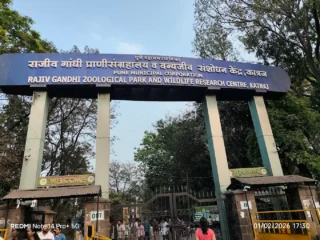
Rajiv Gandhi Zoological Park & Wildlife Research Center
Rajiv Gandhi Zoological Park & Wildlife Research Centre — more commonly known as Rajiv Gandhi Zoo or Katraj Zoo — is one of Pune’s most popular wildlife attractions, located in the Katraj area on Satara Road about 7–10 km from central Pune. It’s managed by the Pune Municipal Corporation and spreads across approximately 130 acres of green, natural landscape that includes forests, animal habitats, and the scenic Katraj Lake. What Makes It Special Three Main Sections:The park is divided into a zoo area, a snake park, and an animal orphanage, giving visitors a broad wildlife experience in one place. Wide Variety of Animals:The zoo is home to mammals, birds and reptiles, including lions, tigers, leopards, sambars, deer, elephants, crocodiles, peafowl and more. Snake Park:It features many species of snakes and reptiles — from pythons and cobras to vipers and tortoises — with educational displays and awareness programmes. Wildlife Research & Conservation:The park isn’t just for display — it also functions as a wildlife research centre and rescue facility, rehabilitating injured or orphaned animals. Conservation Achievements:The zoo participates in ex-situ breeding projects, such as breeding the endangered Indian giant squirrel in captivity, part of efforts to support species conservation. Visitor Experience Natural Setting: Walking paths, shaded areas, resting spots and information signboards help visitors explore comfortably. Battery-Operated Vehicles: For easier exploration, battery-operated rides are available for a small extra fee. Educational Activities: Guided tours, animal-related workshops and wildlife awareness programmes are arranged periodically. Timings & Entry Timings: Generally open 9:30 AM – 5:00 PM (summer hours may extend slightly) and closed on Wednesdays. Entry Fees: Affordable ticket prices with different rates for adults, children, foreigners and special concessions; camera and video permits may require small additional charges. Visitor Tips Wear comfortable walking shoes and carry water and sun protection for an enjoyable visit. Taking a battery-car tour can be helpful, especially with children or for longer walks. The best visiting seasons are the winter and monsoon months (cooler weather). Why Visit Rajiv Gandhi Zoological Park is one of Pune’s top family-friendly tourism spots — perfect for nature lovers, wildlife enthusiasts and school outings. It combines animal seeing, learning experiences, and leisure time in a natural setting, making it a rewarding and educational destination for people of all ages.
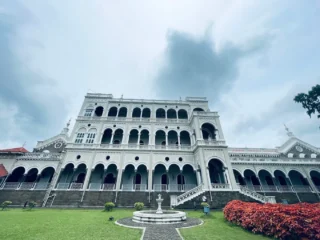
Aga Khan Palace
The Aga Khan Palace was built by Sultan Muhammed Shah Aga Khan III in the city of Pune, India. The palace was an act of charity by the spiritual leader of the Nizari Ismaili Muslims, who wanted to help the poor in the neighbouring areas of Pune, who were drastically hit by famine by offering them work.The construction took place over 5 years and involved one hundred thousand people. It cost approximately 1.2 million rupees. The palace is closely linked to the Indian freedom movement as it served as a prison for Mahatma Gandhi, his wife Kasturba Gandhi, his secretary Mahadev Desai. Sarojini Naidu and several others were also imprisoned during the Quit India Movement that demanded an end to British rule in India. It is also the place where Kasturba Gandhi and Mahadev Desai died.In 2003, Archaeological Survey of India (ASI) declared the site as a monument of national importance. Aga Khan Palace is major attraction of photographers for various kind of photo shoot because of its special architecture, greenery and perfect for photography lighting. Rooms where Mahatma Gandhi, Kasturba Gandhi and Mahadev Desai were Interned History Historically, the palace holds great significance. Mahatma Gandhi, his wife Kasturba Gandhi and his secretary Mahadev Desai were interned in the palace from 9 August 1942 to 6 May 1944, following the launch of Quit India Movement. Kasturba Gandhi and Mahadev Desai died during their captivity period in the palace and have their Samadhis located over there. Mahatma Gandhi and Kasturba Gandhi have their memorials located in the same complex, near Mula river.Legend goes that the Sultan built the palace to provide employment to the famine struck villagers of the surrounding region; so he employed 1000 people, and the palace was constructed in five years. It was built in Rs 12 lakhs. The total area is 7.7 hectares (19 acres) and built up palace covers 2.8 hectares (6.9 acres), and the rest is a well maintained garden. The palace housed a residential co-education School from 1953 – 72. In 1969, Aga Khan Palace was donated to the Indian people by Aga Khan IV as a mark of respect to Gandhi and his philosophy.Today the palace houses a memorial on Gandhi where his ashes were kept. The then prime minister Indira Gandhi had visited the place in 1974 where she allotted a sum of ₹200,000 (US$2,400) every year, for its maintenance. The amount rose to ₹1 million (US$12,000) until the 1990s,after which the national monument of India, was neglected for many years due to improper allocation of funds. There was a protest held at the statue of Mahatma Gandhi near Pune railway station in July 1999 to protest against the worsening condition of the monument. The present condition has improved quite a lot.
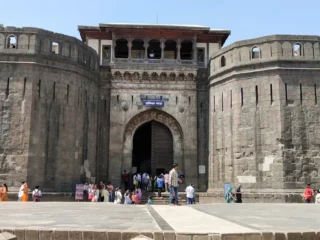
Shaniwar Wada
Shaniwar Wada is a historical fortification in the city of Pune, India. Built in 1732, it was the seat of the Peshwas of the Maratha Confederacy until 1818. The fort itself was largely destroyed in 1828 by an unexplained fire, but the surviving structures are now maintained as a tourist site. History An equestrian statue of Peshwa Baji Rao I, Prime Minister of the Maratha Empire, in the Shaniwar Wada complex. He was the first resident of the fortified palace. The Shaniwar Wada was normally the seven-story capital building of the Peshwas of the Maratha Empire. It was supposed to be made entirely of stone. However, after the completion of the base floor or the first story, the people of Satara (the national capital) complained to the Chhatrapati Shahu saying that a stone monument can be sanctioned and built only by the Chhatrapati himself and not the Peshwas. Following this, an official letter was written to the Peshwas stating that the remaining building had to be made of brick and not stone. By 1758, at least a thousand people lived in the fort. In 1773, Narayanrao, who was the fifth and ruling Peshwa then, was murdered by guards on orders of his uncle Raghunathrao and aunt Anandibai. A popular legend has it that Narayanrao’s ghost still calls for help on full moon nights. Various people, working around the area, have allegedly reported the cries of “Kaka mala vachava” (Uncle, save me) by Narayanrao Peshwa after his death. The book, Assassination of the Peshwa, written in English and Marathi, covers this incident in detail. In June 1818, the Peshwa, Bajirao II, abdicated his Gaadi (throne) to Sir John Malcolm of the British East India Company and went into political exile at Bithoor, near Kanpur in present-day Uttar Pradesh, India. On 27 February 1828, a great fire started inside the palace complex. The conflagration raged for seven days. Only the heavy granite ramparts, strong teak gateways and deep foundations and ruins of the buildings within the fort survived. According to Haricharitramrutsagar, a biographical text of Bhagwan Swaminarayan, he had visited Shaniwarwada on the insistence of Bajirao II in 1799.
Laal Mahaal
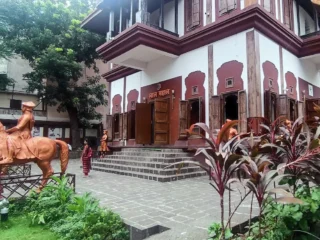
The Lal Mahal (Red Palace) of Pune is one of the most famous monuments located in Pune, India, where Shivaji I, founder of the Maratha Empire, spent his childhood. History Of Lal Mahal The elaborate palace was built in the Pune jagir by the then jagirdar and future mentor of Chhatrapati Shivaji Maharaj, Dadoji Kondadeo in the year 1630 AD with the idea of rejuvenating the recently razed city of Pune. He obtained proper permissions from Shahaji, who was then serving the Ahmadnagar Sultanate and hence had jurisdiction over the region.Thus another purpose served by the Mahal was raising Shahaji’s son, Shivaji. Young Shivaji grew up here, and stayed in the Lal Mahal with his mother Jijabai till he captured the Torna fort in 1645. Shivaji’s marriage with his first wife, Saibai took place in Lal Mahal on 16 May 1640. The Lal Mahal is also famous for an encounter between Shivaji and Shaista Khan where Shivaji cut off four fingers of the latter’s when he was trying to escape from the first-floor window of the Lal Mahal.This was part of a surreptitious guerrilla attack on the massive and entrenched Mughal Army that had camped in Pune, with Shaista occupying (possibly symbolically) Shivaji’s childhood home. As a punishment for the ignominy of the defeat despite superior numbers and better armed and fed soldiers, Shaista was transferred by the Mughal Emperor Aurangzeb to Bengal. Towards the end of the 17th Century, the Lal Mahal was ruined by some people and was eventually razed to the ground as a result of various attacks on the city.It is said that during the construction of the Shaniwarwada, some soil and stones of the Lal Mahal were used for luck. In 1734-35, a few houses were constructed on the land of the Lal Mahal and given for use to Ranoji Shinde and Ramchandraji. The records in the offices of the Peshwas mention that Lal Mahal was used for arranging feasts during the thread-ceremony of Sadashivrao Bhau, son of Chimaji Appa. The exact original location of the Lal Mahal is unknown, however, it was known to be very close to the location of Shaniwarwada, which is roughly where the current reconstruction stands. Reconstruction and current structure The current Lal Mahal was built only on a part of the land of the original Lal Mahal. The new Lal Mahal was not rebuilt in the same fashion as the original one and there is not much information found about the area and structure of the original Lal Mahal. The current Lal Mahal was rebuilt by the Pune Municipal Corporation. Construction started in 1984 and was completed in 1988.[7] The current Lal Mahal is a memorial holding a collection of large-size oil paintings based on the significant events in the life of Shivaji, a statue of Jijabai, a carving depicting Shivaji using a gold plow along with Jijabai, a fiber model of Raigad with horsemen and a huge map of Maharashtra indicating the forts of Shivaji. The popular Jijamata Garden is now a recreational park for kids. There used to be a statue of the Mahal’s original builder, Dadoji Kondadeo, which was of great detail.It was installed during the reconstruction as a tribute to Kondadeo. It was removed in 2010 due to violence and protests regarding its significance.